



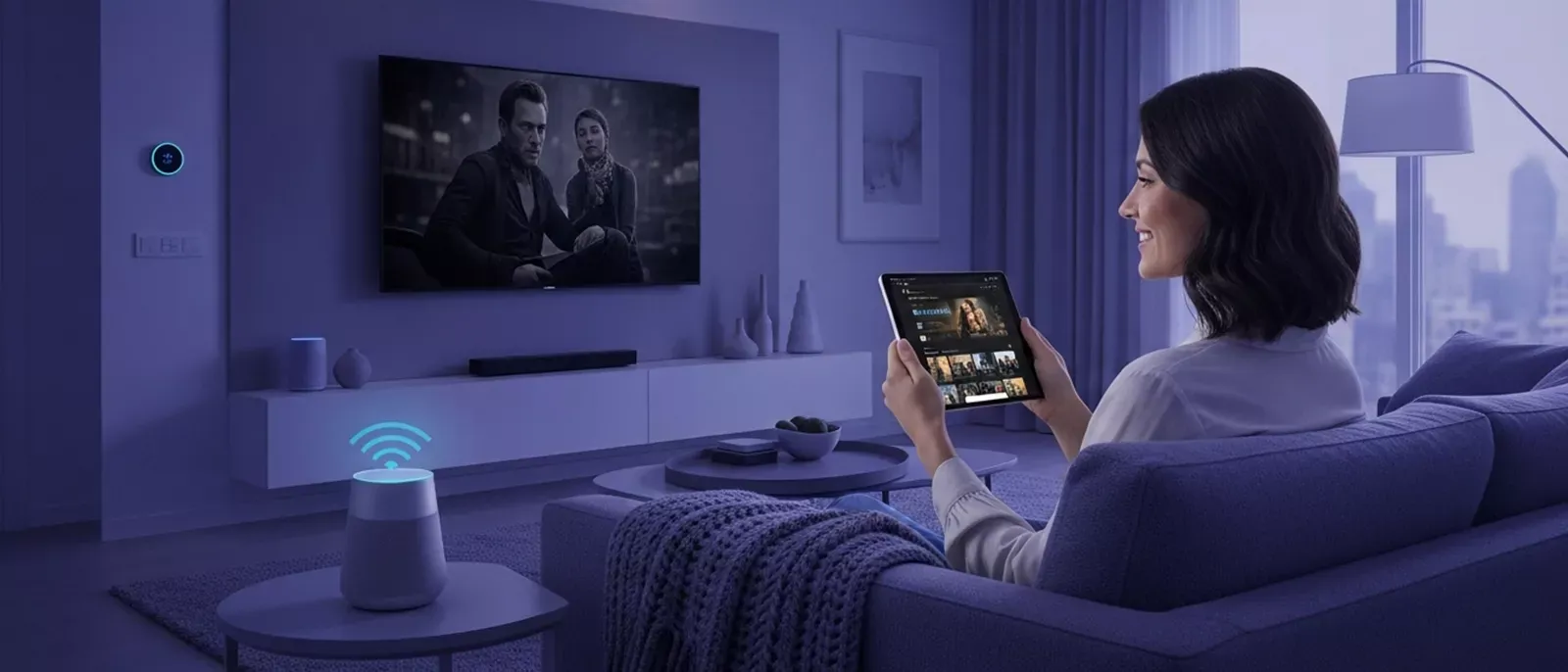
Why fiber internet is the future of smart homes
Smart homes are no longer science fiction—they’re a part of everyday life. From connected thermostats and voice assistants to security cameras and multi-room streaming, the number of devices in the average home keeps growing. That growth creates two unambiguous needs: more bandwidth and more reliability.
That’s where fiber internet comes in. In this article, we’ll explain why fiber is uniquely suited to power today’s smart homes, why Quantum Fiber Internet is a strong choice, and how to choose the best internet for smart homes so your household runs smoothly for years to come.
Smart homes demand more than occasional speed spikes
A smart home doesn’t rely on a single device. It’s an ecosystem: smart locks, lighting systems, connected appliances, cloud-backed cameras, gaming consoles, work-from-home setups, and often multiple 4K or 8K streams at once. Many of these devices are constantly communicating with cloud services—sending video, receiving updates, or streaming content.
That persistent, simultaneous traffic is different from the occasional file download or webpage visit. What your home needs is consistent, low-latency throughput that doesn’t degrade the moment someone starts a video call or a game session.
Fiber internet addresses that head-on. Unlike traditional copper-based connections, fiber delivers high, symmetrical speeds that keep upload-heavy applications (like security cameras and video conferencing) as responsive as downloads. For smart homes, this means fewer dropped calls, smoother streams, and faster responses from voice and automation systems.
Reliability matters: Avoid bottlenecks
A fast peak speed is great for a provider’s marketing campaign, but smart homes also require reliability. Network congestion, signal interference, and distance from the ISP’s equipment can all cause lag and outages on DSL, cable, or wireless-only plans. A fiber optical connection is much less susceptible to electromagnetic interference, weather-related degradation, and signal attenuation over distance. That makes fiber internet inherently more stable.
When you pair that physical reliability with a service like Quantum Fiber, engineered to deliver consistent performance for device-dense environments, you’re investing in a network that will keep your home running without unexpected hiccups. For smart home users, fewer interruptions translate directly into convenience, safety, and peace of mind.


Symmetrical speeds make modern features work properly
Many smart home features rely on uploading data: cloud backups, home security cameras, remote monitoring, video chats, and IoT telemetry. Cable and DSL often prioritize download speed while leaving upload lanes narrow.
Fiber, on the other hand, provides symmetrical speeds—the same upload and download capacity. That symmetry is a practical advantage: it means your home can upload high-definition camera feeds while other family members stream or game, without a single feature slowing down.
If you want to get the most from services like cloud-based home security, video doorbells, or telemedicine appointments, choosing a provider that supports symmetrical bandwidth, like Quantum Fiber, is a decisive factor in selecting the best internet for smart homes.
Ultra-low latency unlocks better responsiveness
Latency—the delay before data transfer begins following an instruction—is often overlooked, yet it’s crucial for real-time applications. Low latency improves responsiveness for voice assistants, smart locks, remote desktop sessions, and online gaming.
Fiber’s transmission characteristics typically result in significantly lower latency compared to copper-based networks. That means commands reach devices faster and systems respond as expected, which is especially important for safety-related actions (for example, unlocking a door or receiving a security alert).
In a smart home, millisecond delays can mean the difference between “acceptable” and “seamless.” For households that depend on instantaneous responses, fiber internet is the infrastructural upgrade that makes the difference.


Future-proofing: More devices, higher expectations
Technology evolves fast. Today’s smart bulbs, speakers, and cameras are only the beginning—tomorrow will bring more powerful AR/VR experiences, AI-assisted home automation, higher-resolution video, and maybe even edge-cloud workflows that require local low-latency compute plus fast links to cloud services. Investing in fiber now means you don’t need to upgrade every few years as device demands rise.
Quantum Fiber designs its internet plans with headroom for future requirements. With speeds up to 2 Gigs (2000 Mbps), Quantum Fiber is a great option for the best internet for smart homes that will last beyond the next device wave.
Security and quality of service: keeping critical devices prioritized
Smart homes are also cyber targets. A well-architected fiber network simplifies implementing robust security measures because the stable, high-bandwidth connection supports encrypted backups, over-the-air updates, and secure VPN tunnels without performance penalties. Additionally, many fiber providers and routers offer quality of service (QoS) controls that let you prioritize traffic—for example, ensuring your security cameras and work calls always get bandwidth over a large file download.
When combined with good device hygiene—regular firmware updates, strong passwords, and device segmentation—fiber internet helps you build a more resilient and manageable home network that keeps critical functions online.


Easy scaling and better value over time
As your home evolves, you’ll add devices and new services. Scaling on fiber is straightforward: many fiber plans let you upgrade your speed tier without changing the physical infrastructure. That makes future upgrades easier and often more cost-effective than switching out legacy copper lines or balancing multiple wireless solutions.
The long-term value proposition for fiber internet is strong—a single, robust connection replaces multiple stopgap solutions, reducing complexity and future stress.
Why choose Quantum Fiber?
Quantum Fiber provides the consistent, symmetric bandwidth that modern smart homes need. Whether you’re streaming multiple 4K movies, hosting high-bandwidth video calls, or running a fleet of connected security devices, Quantum Fiber Internet plans deliver stable performance with the kind of reliability smart homes demand.
For households prioritizing responsiveness, security, and future growth, Quantum Fiber is a natural fit when evaluating the best internet for smart homes.
Practical tips for getting the most from your fiber connection
To maximize the benefits of fiber internet, follow a few simple best practices: place your Wi-Fi router centrally and consider mesh Wi-Fi for larger homes; use wired Ethernet for stationary bandwidth-heavy devices like consoles and smart hubs; enable QoS to prioritize critical smart-home traffic; and keep device firmware up to date. Finally, check if your Quantum Fiber plan includes advanced home networking services or managed equipment—those options can simplify setup and ongoing maintenance.


Make the smart choice for a smarter home
If you’re building or upgrading a smart home, the internet connection you choose today shapes your experience for years. Fiber internet offers the symmetrical speeds, low latency, and rock-solid reliability modern connected households need.
Quantum Fiber makes it straightforward to get that level of performance, helping your devices communicate faster, your security systems stay online, and your entertainment remain seamless. When you want a network that can grow with your home and deliver the best experience now and in the future, choosing the best internet for smart homes means choosing fiber.
Ready to future-proof your connected home? Explore Quantum Fiber plans and find the option that suits your household’s needs—because smart homes deserve smart internet.